
Robert Baden-Powell’s writings are more than just old books; they’re the foundation of a movement that’s shaped generations.
His ideas, especially those in his famous scouting books, laid out a path for young people to learn about character, responsibility, and helping others. We’re going to take a look at some of the key books by Robert Baden Powell and what they really meant, and still mean, today.
Key Takeaways
- Robert Baden-Powell’s “Scouting for Boys” was a major work, drawing from his military experiences and other writings to create a guide for youth.
- His books, including “Yarns for Boy Scouts” and “The Wolf Cub’s Handbook,” expanded on the core ideas of scouting for different age groups.
- Baden-Powell also wrote for leaders, with books like “Aids to Scoutmastership,” to help guide adult mentors.
- The themes in his books, like self-reliance and good citizenship, were intended to build character and prepare young people for life.
- From military skills to character building, Baden-Powell’s books by Robert Baden Powell offer a look into the origins and enduring principles of the scouting movement.
The Enduring Legacy of Scouting for Boys
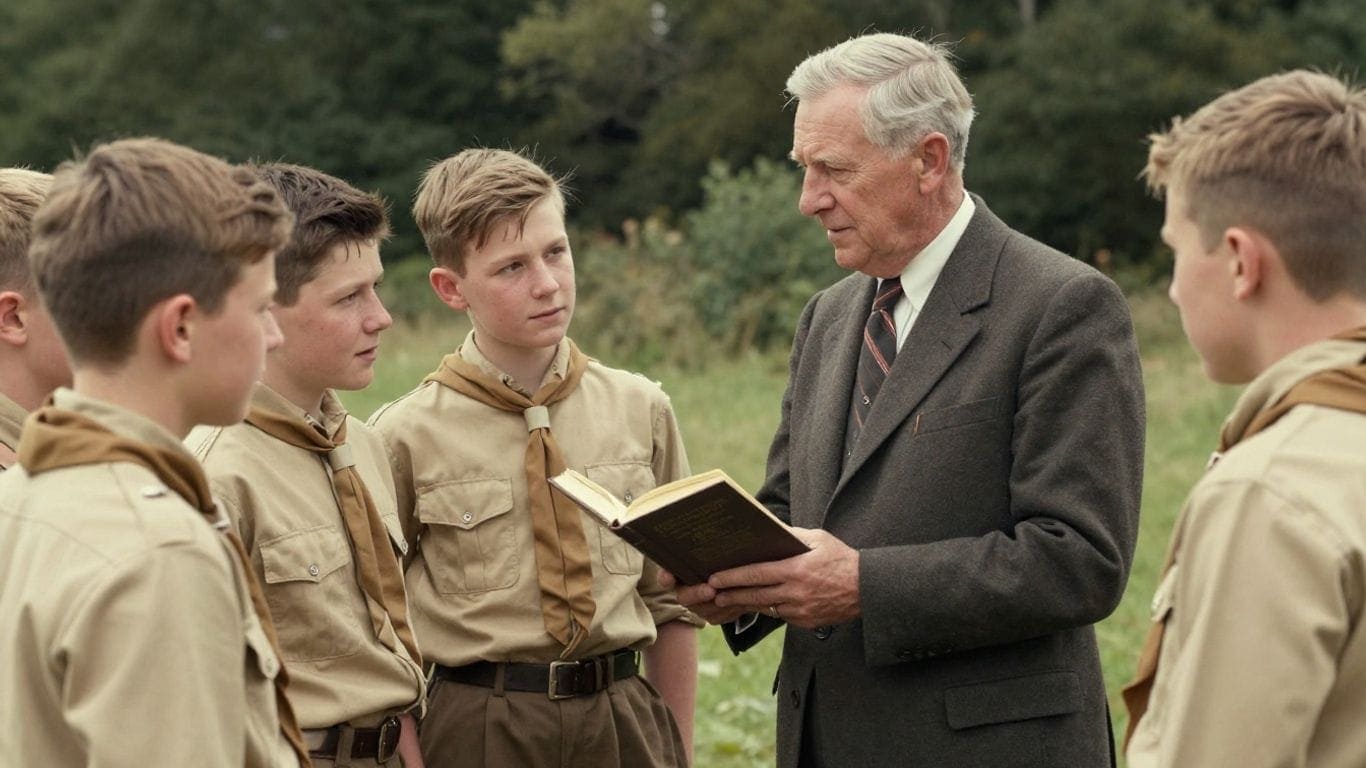
A Blueprint for Character and Citizenship
Scouting for Boys, first published in 1908, laid the groundwork for a movement that aimed to shape young people into responsible, capable adults. Lord Baden-Powell intended this book as more than just a manual; it was a guide to building character and fostering good citizenship. He observed a decline in the hardiness of young men and sought to counter this through practical skills and a focus on personal responsibility. The book emphasizes self-reliance, discipline, and a commitment to serving others. It’s a call to action for boys to develop their physical and mental capabilities, preparing them for the challenges of life.
The core message is simple: be prepared for whatever life throws your way. This means not just having the right gear, but also the right attitude and skills.
From Military Manual to Youth Movement
While drawing inspiration from his military experiences and the book Aids to Scouting, Baden-Powell adapted these lessons for a younger audience. He saw the potential for military-style training in observation, tracking, and teamwork to be applied to peacetime activities. The goal was not to prepare boys for war, but to cultivate qualities like courage, resourcefulness, and a sense of duty. This transformation from a military context to a youth movement highlights Baden-Powell’s vision of using practical skills to build better citizens. The book’s initial serial publication saw an immediate and enthusiastic response from boys, demonstrating a clear public demand for this kind of guidance.
The Core Principles of Good Citizenship
At its heart, Scouting for Boys is about instilling principles that lead to good citizenship. Baden-Powell believed that spending time outdoors, engaging in physical activities, and working cooperatively in small groups, or patrols, were key. These activities were designed to build resilience, teamwork, and a connection with nature. He stressed the importance of observation, self-control, and a willingness to help others. The book encourages boys to be observant, to think critically, and to act with integrity. These principles, he argued, would not only benefit the individual but also contribute to the betterment of society.
Here are some of the core principles emphasized:
- Self-Reliance: Learning to depend on oneself and one’s skills.
- Observation: Developing the ability to notice details and understand their meaning.
- Teamwork: Working effectively with others towards a common goal.
- Service: A commitment to helping others and contributing to the community.
- Preparedness: Being ready for challenges through training and foresight.
Beyond the Handbook: Other Essential Books by Robert Baden Powell

While “Scouting for Boys” is undoubtedly his most famous work, Robert Baden-Powell penned many other books that offer deeper insights into his philosophy and the movement he inspired. These writings expand on the foundational ideas, providing guidance for different age groups and aspects of life. Exploring these additional books by Baden-Powell reveals the breadth of his vision and his dedication to shaping young people.
Yarns for Boy Scouts: Expanding the Scouting Narrative
This collection offers more than just stories; it’s a way to weave the spirit of adventure and service into the fabric of young lives. Baden-Powell used engaging tales to illustrate the values he held dear. These narratives often drew inspiration from his own experiences and the wider world, much like the themes found in The Jungle Book. The book serves as a companion to the original handbook, providing further examples and encouragement for readers.
The Wolf Cub’s Handbook: Nurturing Younger Adventurers
Recognizing the need for a program tailored to younger children, Baden-Powell developed “The Wolf Cub’s Handbook.” This book adapts the core principles of scouting for a younger audience, focusing on play, imagination, and early development of good habits. It introduces concepts like the Law and Promise in a way that is accessible and exciting for children just beginning their journey. The handbook emphasizes learning through doing and encourages a sense of belonging within a pack.
Rovering to Success: Guiding Young Men into Adulthood
As young people mature, their challenges and aspirations change. “Rovering to Success” addresses this transition, offering guidance for older youth as they prepare for adult life. Baden-Powell discusses practical skills, character development, and the pursuit of a fulfilling life. The book encourages self-reliance and responsible citizenship, providing a roadmap for navigating the complexities of the world. It’s a thoughtful look at the path ahead for those ready to take on more responsibility.
Baden-Powell believed in continuous growth, and his books reflect a journey from initial instruction to lifelong learning and contribution. Each title builds upon the last, offering a layered approach to personal development and community involvement.
Aids to Scouting: The Genesis of a Movement
Lessons Learned from the Field
Robert Baden-Powell’s initial work, Aids to Scouting, wasn’t originally intended for young people. It grew out of his experiences as a soldier, particularly during the Second Boer War. He wrote it to share practical skills he learned in military reconnaissance and survival. The book detailed how to track, observe, and navigate in the wild. These were skills honed in challenging environments, meant to help soldiers operate effectively. It was a practical guide for adults, focusing on self-reliance and keen observation. The lessons were direct, born from necessity and real-world application. It’s fascinating to think how these military techniques would soon form the bedrock of a youth movement.
Adapting Military Skills for Youth
When Aids to Scouting was published, Baden-Powell likely didn’t anticipate its widespread appeal beyond military circles. However, educators and youth leaders saw its potential. They recognized that the principles of observation, resourcefulness, and self-discipline could be incredibly beneficial for boys. The book’s focus on practical outdoor skills and character building was a perfect fit for youth development. It offered a way to teach boys valuable life lessons through engaging, hands-on activities. This adaptation transformed a military manual into a blueprint for character development, showing how practical skills could nurture young minds and bodies. It was a clever repurposing of existing knowledge for a new, vital purpose.
The Unexpected Popularity of a Soldier’s Guide
The transition of Aids to Scouting from a military text to a foundational document for a youth movement was quite remarkable. Its unexpected popularity with teachers and youth groups showed a clear need for this kind of practical, character-focused training. Baden-Powell observed this interest and decided to rework his ideas for a younger audience. He took the core concepts of observation, tracking, and self-reliance and repackaged them. This led to the creation of Scouting for Boys, a book that would go on to inspire millions. The original work, however, remains a testament to the power of practical skills and the adaptability of good ideas. It’s a reminder that sometimes, the most impactful innovations come from unexpected places, like lessons learned from the field.
The Scoutmaster’s Compass: Guidance for Leaders
Robert Baden Powell didn’t just want to teach outdoor skills—he wanted adults to help young people grow into responsible, caring citizens. His books for leaders get straight to the point: adults guiding youth must connect, communicate, and care deeply. Helping a young person build confidence and character can shape their entire life.
Aids to Scoutmastership: Empowering Mentors
A great leader doesn’t have to be perfect at everything. Baden Powell explained that understanding and patience matter more than mastery. To be a strong guide, an adult should:
- Listen actively and show real interest in young people
- Encourage problem-solving and teamwork
- Support growth, not just achievement
- Lead by example—with kindness and self-respect
He offered practical advice on creating activities that bring out the best in each participant. For parents, being present and engaged matters more than having every answer.
When adults take the time to support and uplift youth, they teach lessons more valuable than any badge or medal.
Lessons from the ‘Varsity of Life: Wisdom for All Ages
Baden Powell’s reflections in this book are blunt but warm. He admits every adult is still learning, and life offers new challenges at every turn. For those leading youngsters, he suggests:
- Admit your mistakes openly
- Show curiosity and never stop learning
- Treat every person with fairness, no matter their background
He also pushes for humor and lightness. If leaders can laugh at themselves, young people learn resilience and how to cope with setbacks.
The Role of Leaders in Shaping Young Lives
A mentor has the power to either inspire or discourage. Every conversation, every shared challenge, and every mistake can make a difference. Baden Powell urged adults to think of the movement as an engine for positive change. Success wasn’t winning competitions or earning awards. It was about building trustworthy, resourceful, and kind-hearted adults.
- Set clear, simple goals for individuals, not just the group
- Prioritize honesty, effort, and empathy in every activity
- Balance structure with freedom—let youth lead sometimes, and be a safety net when needed
If you want a powerful example of the impact of mentorship, the story of the global Scouting movement’s growth from one small experiment on Brownsea Island proves that guidance and optimism can change the world.

Scouting’s Global Reach: Baden-Powell’s Vision for the World
Robert Baden-Powell didn’t just want to teach boys skills; he wanted to build bridges between people. His vision for the movement extended far beyond Britain’s shores. He saw it as a way to unite young people from different backgrounds and nations through shared experiences and values. This global perspective was baked into the very fabric of the program from its early days.
Imperial and International Dimensions of Scouting
Baden-Powell’s travels and military career exposed him to diverse cultures and peoples. He observed firsthand how different groups interacted and how common ground could be found.
His writings often reflected a desire to foster understanding and cooperation, particularly between people of British descent and those in the wider empire. He believed that shared activities and a common code of conduct could help overcome national and ethnic differences. This was a bold idea for his time, aiming to create a sense of global community among young people. He saw the potential for the movement to be a force for peace and mutual respect on an international scale, a truly ambitious goal for the early 20th century.
Encouraging Comradeship and Helpfulness
At the heart of Baden-Powell’s international vision was the idea of comradeship. He wanted boys from all walks of life, and eventually from all countries, to see each other as brothers. The Scout Law, with its emphasis on loyalty, helpfulness, and kindness, was designed to be universal. He believed that by practicing these virtues, young people could build strong bonds that transcended borders. This focus on mutual support and service was intended to create a generation that looked out for one another, no matter where they lived. It was about building a worldwide network of individuals committed to making a positive difference in their communities and beyond. The Baden-Powell Fellowship continues this spirit today by supporting millions of young people globally.
The Universal Appeal of Adventure and Service
What made Baden-Powell’s program so successful internationally was its blend of adventure and practical service. The appeal of outdoor activities, skill-building, and the spirit of exploration was something that resonated with young people everywhere. Whether it was learning to navigate by the stars or helping someone in need, these activities offered a sense of purpose and excitement. Baden-Powell understood that these shared experiences could create a powerful sense of belonging. He saw that the desire for adventure and the innate human impulse to be helpful were common threads that could tie together a global movement. This universal appeal allowed the program to adapt and thrive in countless different cultural contexts, proving its enduring relevance.
The Art of Self-Reliance: Baden-Powell’s Practical Wisdom

Mastering Observation and Tracking
Baden-Powell believed that paying attention to the world around you was a skill that could be learned and honed. He taught that true self-reliance starts with understanding your environment. This means noticing the small details, like the tracks left by an animal or the subtle signs of changing weather. He encouraged young people to practice looking closely at things, not just glancing. Developing sharp observation skills helps you anticipate needs and react wisely. It’s about seeing what others miss, which is a big part of being prepared for anything.
Developing Self-Control and Discipline
Beyond just physical skills, Baden-Powell stressed the importance of inner strength. He wrote about how controlling your impulses and staying calm under pressure are vital. This kind of discipline isn’t about harsh rules; it’s about making good choices for yourself and others. He suggested that practicing self-control in everyday situations builds a strong character. This mental toughness allows you to face challenges head-on without getting flustered. It’s about being the master of your own actions, not letting your emotions run the show.
The Importance of Being Prepared
Baden-Powell’s most famous motto, “Be Prepared,” sums up his philosophy on self-reliance. This wasn’t just about having the right gear; it was about having the right mindset. It meant thinking ahead, planning for different possibilities, and being ready to act. He wanted everyone to be capable of handling whatever life threw at them. This preparation involves learning practical skills, yes, but also cultivating a resourceful attitude. It’s about knowing you can figure things out, no matter the situation.
Here are some key areas Baden-Powell highlighted for self-reliance:
- Observation: Learning to see and interpret details in your surroundings.
- Resourcefulness: Finding creative solutions to problems with what you have.
- Self-Discipline: Managing your emotions and actions effectively.
- Forethought: Thinking ahead and planning for potential challenges.
True self-reliance is built on a foundation of practical knowledge and a strong inner character. It’s about being capable, adaptable, and ready to face life’s adventures with confidence.
Baden-Powell’s ideas on self-reliance are super useful. He taught that being able to handle things yourself is a key skill. This means learning to solve problems and not always depending on others. It’s about building confidence and becoming a capable person. Want to learn more practical tips? Visit our website today!

More Than Just a Book
So, we’ve looked at how Robert Baden-Powell’s writings, especially ‘Scouting for Boys,’ laid out a whole way of thinking for young people. It wasn’t just about learning knots or building fires, though those were part of it. It was really about building character, learning to look out for others, and stepping up when needed. These ideas, shared through his books, helped shape a movement that’s still around today, in different forms. For parents and families, thinking about these old books can give us a good sense of where many modern character-building programs, like those focused on outdoor adventure and leadership, got their start. It’s a reminder that some lessons about being a good person and a good citizen just don’t go out of style.
Frequently Asked Questions
What is ‘Scouting for Boys’ and why is it important?
‘Scouting for Boys‘ is a book written by Robert Baden-Powell that basically started the whole Scouting movement. It’s important because it wasn’t just about outdoor fun; it was a guide to help boys become good people, learn to be responsible, and help others. It laid out the ideas for character building and citizenship that still influence youth programs today.
Was ‘Scouting for Boys’ Baden-Powell’s first book?
No, ‘Scouting for Boys’ was actually a rewrite of an earlier book he wrote called ‘Aids to Scouting.’ That first book was meant for soldiers, teaching them skills like tracking and observing. But it became surprisingly popular with kids and teachers, which led Baden-Powell to adapt it for a younger audience.
What are some other important books by Robert Baden-Powell?
Besides ‘Scouting for Boys,’ Baden-Powell wrote several other key books. These include ‘The Wolf Cub’s Handbook’ for younger kids, ‘Yarns for Boy Scouts’ which added more stories and ideas, and ‘Rovering to Success’ to guide older boys into adulthood. He also wrote ‘Aids to Scoutmastership’ to help leaders guide their troops.
What kind of skills did Baden-Powell want boys to learn from his books?
He wanted boys to learn a lot of practical skills, like how to observe their surroundings, track things, and be good at camping. More importantly, he wanted them to develop strong character – things like being honest, kind, self-reliant, and always ready to help. The motto ‘Be Prepared’ sums up this idea of readiness and responsibility.
Did Baden-Powell’s books only focus on boys?
While ‘Scouting for Boys’ was aimed at boys, Baden-Powell did acknowledge girls. In his book ‘Yarns for Boy Scouts,’ he mentioned that girls could also benefit from Scouting principles and should be raised as ‘comrades and helpers.’ This thinking eventually led to the creation of the Girl Guides movement.
Are Baden-Powell’s books still relevant today?
Yes, the ideas in Baden-Powell’s books about character, leadership, self-reliance, and community service are still very relevant. Many modern youth programs, like Trail Life USA, continue to focus on outdoor adventure and developing good character, showing how lasting his vision was. His books offer timeless wisdom on how to grow into a capable and caring person.

Kurt Uhlir serves on the volunteer leadership team of Trail Life USA Troop GA-4100 and is passionate about raising boys who understand that true leadership begins with service. He grew up in Boy Scouts and has built more than 25 miles of hiking trails, many of which he still maintains alongside his two kids. He chose Trail Life for its hands-on learning, the way it challenges boys to take responsibility and build character, and the quality of the dads, uncles, and grandfathers his son learns from each week. Kurt believes you must learn to follow well before you can lead well, and Trail Life gives fathers and sons the opportunity to practice both together. Outside the troop, Kurt is regularly invited to speak on business and leadership, focusing on building high-performing companies and, increasingly, helping parents win at work and at home.