
Trail Life USA Programs
Trail Life is a structured outdoor mentoring program for boys in Kindergarten through 12th grade. Organized by age and stage of development, each level builds character, practical skills, and leadership in ways that grow with a boy over time. Boys are welcome to join at any age and step into the program at the level designed for them.
Overview of the Program
Trail Life is organized into three age-based programs that build on one another as boys grow:
-
Woodlands Trail (Kindergarten–5th Grade)
-
Navigators (6th–8th Grade)
-
Adventurers (9th–12th Grade)
Each level is designed for a specific stage of development. The expectations, structure, and leadership opportunities increase as boys mature.
Boys are placed in small patrols with others their age. In the early years, adults provide close structure and guidance. By middle school, boys begin taking responsibility within their patrol. In high school, leadership shifts primarily to the young men themselves, with adults serving as mentors and oversight.
What Woodlands Is
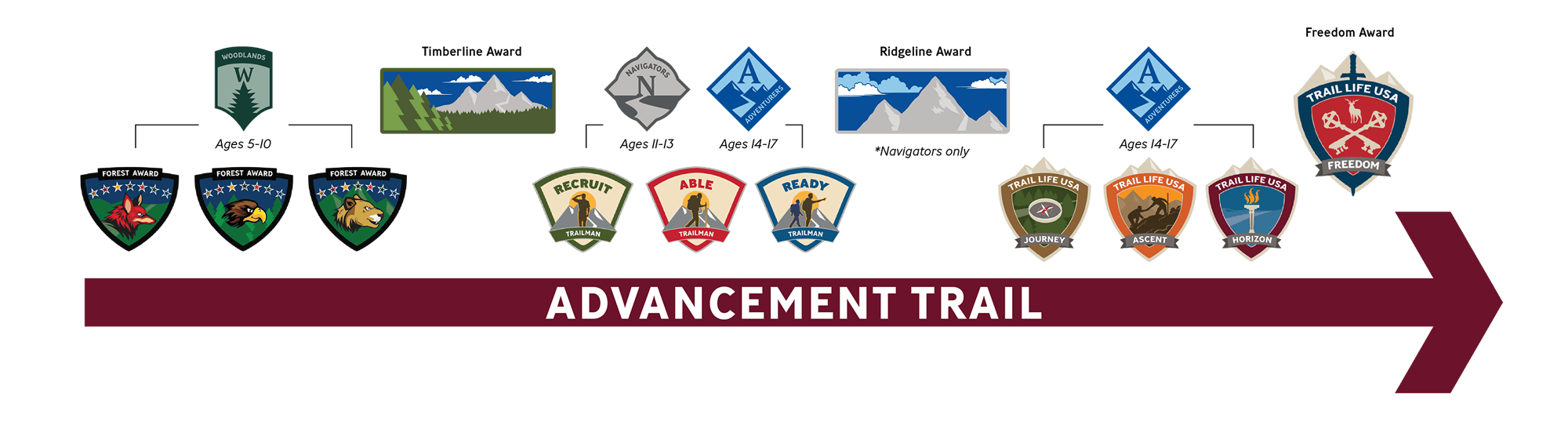
Woodlands Trail is designed specifically for elementary-age boys (ages 5–10). These are foundational years — when boys are forming habits, learning how to work in groups, and discovering what they are capable of.
Meetings are active and hands-on, with lots of motion and activities. Boys learn outdoor basics, life skills, citizenship, teamwork, and character through doing — not sitting still. Learning happens through games, skill instruction, short challenges, and shared experiences.
Woodlands is built around seven program branches that provide structure and variety across the elementary years:
Outdoor Skills • Life Skills • Heritage • Hobbies • Values • Science & Technology • Sports & Fitness
These branches ensure boys are exposed to a broad range of skills and character-building experiences. The categories remain consistent from Kindergarten through fifth grade, while the level of challenge increases as boys mature.
Boys are grouped into small, grade-based patrols where friendships form naturally. The structure is clear and consistent so boys know what to expect each week. Adult leaders provide close guidance and encouragement while helping boys take small, appropriate steps toward responsibility.
Expectations grow gradually across these years. A Kindergarten boy is not expected to operate at the level of a fifth grader. The program is intentionally designed to mature with him.
Parents are encouraged to participate alongside their sons as they are able, especially during the early years and on overnight activities. This shared involvement strengthens confidence and connection while still allowing boys to grow in independence over time.


Fox Patrol
Kindergarten–1st Grade | Ages 5–7
Foxes are being introduced to structure, teamwork, and basic skill development.
Within the seven branches, instruction is simple and activity-driven. Outdoor Skills may include basic safety awareness and nature exploration. Life Skills emphasize listening, participation, and simple responsibility. Values and Heritage are introduced through short stories and guided discussion. Science & Technology and Hobbies focus on exploration rather than mastery. Sports & Fitness centers on movement and coordination.
Foxes participate in overnight camping alongside a parent or responsible adult. The focus at this level is confidence and positive first experiences.

Hawk Patrol
2nd–3rd Grade | Ages 7–9
Hawks are capable of longer instruction, more detailed skill work, and greater personal responsibility.
Across the seven branches, boys begin demonstrating follow-through. Outdoor Skills involve more practical application. Life Skills include task ownership and reliability. Values discussions allow boys to articulate understanding. Science & Technology and Hobbies become more hands-on and skill-oriented. Sports & Fitness challenges increase in structure.
Camping still typically includes a parent or responsible adult, but boys begin managing personal gear, assisting with setup, and contributing to group tasks.

Hawk Patrol
4th–5th Grade | Ages 9–11
Mountain Lions operate with noticeably increased independence.
Within the seven branches, expectations rise. Outdoor Skills require practical competence. Life Skills emphasize accountability. Values discussions deepen. Science & Technology activities become more complex. Sports & Fitness incorporates endurance and teamwork.
Mountain Lions may camp as a patrol under adult supervision. Boys are expected to manage gear, contribute meaningfully to group responsibilities, and begin modeling maturity for younger patrols.
Woodlands Recognition & Progression
Even in strong families, boys often receive truth differently from mentors outside their home. Trail Life reinforces what parents are already teaching – in ways that stick.
Recognition in Woodlands
Woodlands recognition is designed to encourage steady participation and visible growth.
Each boy begins with a Branch Patch. As he participates in activities across the seven program branches —
Outdoor Skills • Life Skills • Heritage • Hobbies • Values • Science & Technology • Sports & Fitness —
he earns Branch Pins that attach to the patch.
When all seven branches are completed at a patrol level, a boy earns the Forest Award for that stage.
Recognition reflects consistent participation and skill development — not speed or competition.

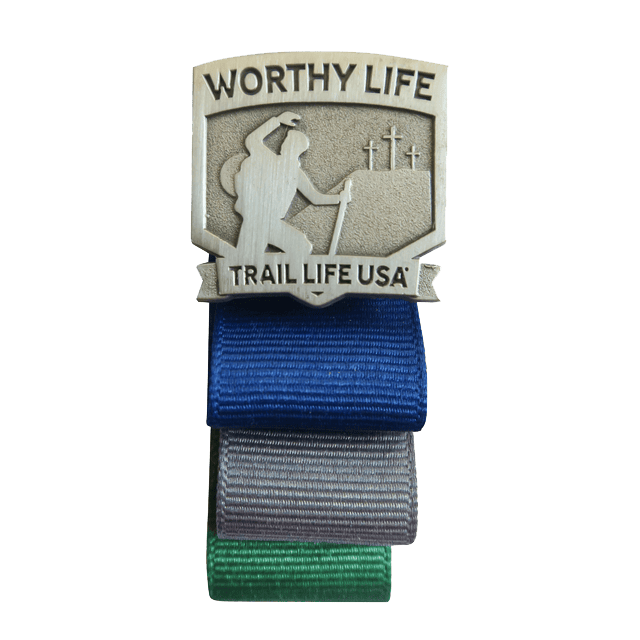
Worthy Life Award
Within each branch, boys can also work toward the Worthy Life Award, which emphasizes biblical character and personal growth.
This award reinforces that skill development and character formation go hand in hand. Boys are encouraged to reflect on how what they are learning shapes who they are becoming.
Timberline Award
The Timberline Award is the highest recognition within the Woodlands Trail.
Earned during the Mountain Lion years, it marks the completion of the elementary program and recognizes consistent participation across the branches.
For many boys, the Timberline Award becomes a meaningful milestone as they prepare to transition into the Navigators program.

Transitioning into Navigators
Middle School | Ages 11–13
Middle school is where expectations rise.
Navigators is designed for boys in sixth through eighth grade who are ready for more responsibility. Patrols function with greater independence. Boys cook, camp, manage gear, and take ownership of real tasks within their group. Adult leaders still provide oversight, but they step back so boys can step up.
What’s different in Navigators:
-
Patrols camp and cook with greater independence
-
Youth leadership roles become active and expected
-
Skills must be demonstrated — not just attempted
-
Advancement requires personal initiative
Boys moving up from Woodlands begin carrying a Standard — a staff used to display rank medallions and badges as they advance. It serves as a visible record of growth through the middle and high school years.
For families joining Trail Life at this stage, there is no disadvantage to starting here. A sixth, seventh, or eighth grader enters at the Navigator level and begins working toward the Recruit Trailman rank. Leaders walk new members through expectations and advancement from the beginning.
Navigators is where advancement becomes structured and responsibility becomes measurable.
Navigator Ranks
Navigators advance through three ranks during the middle school years. The progression is intentional: learn the system → build competence → prove readiness.
Recruit Trailman
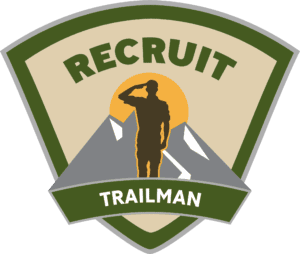
Focus: Orientation + belonging + basics
Recruit is where a boy gets grounded in how the Troop works and what is expected in a patrol.
What boys learn and practice at this stage:
- Patrol basics: names, roles, how meetings run, what “owning your part” looks like
- Foundational citizenship and responsibility (the kind of basics that show up fast in how a boy carries himself at meetings and outings)
- First exposure to advancement: what Trail Badges are, how requirements are completed and signed off, and how progress is tracked (high level only here)
Recruit is the on-ramp. The goal is confidence and clarity, not speed.
Able Trailman
Focus: Core skills start becoming real
Able is where boys begin building practical competence. It’s not “try it once.” It’s learn it, practice it, demonstrate it.
What boys typically start tackling here (examples of core-skill badge areas):
Camping + Outdoor Cooking: gear, setup, planning, food, cleanup discipline
First Aid: practical scenarios and readiness mindset
Ropework + Woods Tools: safe tool handling, knots, basic competence
Our Flag / Citizenship elements: respect, responsibility, doing things the right way
Ready Trailman
Focus: Proven capability + consistency
Ready is where boys demonstrate they can operate as a dependable patrol member on outings and contribute like it matters.
What “Ready” looks like in practice:
-
Core outdoor competence: the full set of core skills areas are completed (often framed as nine required/core badges)
-
Electives that match interest: boys add elective badges that reflect what they’re drawn toward (and Trail Life explicitly frames electives as helping a boy explore areas of gifting/interest).
-
Responsibility under real conditions: showing up prepared, following through, helping others, and handling tasks without being chased
Ridgeline Award
The Ridgeline Award is the highest recognition within the Navigators program.
While Ready Trailman reflects proven competence, Ridgeline represents sustained commitment across the middle school years.
To earn Ridgeline, a Navigator must:
-
Complete the Ready Trailman rank
-
Earn the Navigator Worthy Life Award
-
Demonstrate consistent participation
-
Complete a meaningful service project
Ridgeline signals that a boy has not only developed skill, but has followed through.
It marks readiness to enter the Adventurers program, where expectations rise again and long-term leadership becomes the focus.
Adventurers
Ages 14–17
High school changes the equation.
This is no longer about learning basic skills. It is about leading, initiating, and carrying weight.
Adventurers operate at a different level. Patrol leaders plan outings. Older boys mentor Navigators. High adventure becomes more demanding — longer treks, more complex logistics, greater physical and mental challenge.
Advancement continues, but it now requires sustained effort over multiple years. Leadership is no longer optional. Service becomes significant. Character is tested under pressure — not just discussed in meetings.
This stage is designed for young men who are willing to do hard things and follow through.
Trail Life now operates in all 50 states with more than 70,000 active members — and Adventurers represent the visible standard of maturity within each Troop.
The vision traces back to the original Scouting movement founded by Robert Baden-Powell in 1908 — building capable young men through challenge, responsibility, and service.
Adventurers is where that vision becomes personal.

Adventurer Ranks
Journey → Ascent → Horizon
Adventurers continue building core outdoor competence, but the real shift is scope: more leadership, more ownership, more sustained follow-through.
Journey Trailman
Focus: Step into high school leadership
Journey is where a young man moves from participation to active responsibility.
At this stage, he:
-
Begins holding defined leadership roles within the Troop
-
Starts completing required Adventurer Trail Badges
-
Initiates Freedom Experiences that push skill and resilience
-
Takes ownership of planning and follow-through
Journey establishes momentum.
Ascent Trailman
Focus: Lead people, not just tasks
Ascent is where leadership becomes weight-bearing.
A young man at this stage:
-
Leads patrols or major components of outings from planning through execution
-
Mentors younger Trailmen intentionally and consistently
-
Oversees logistics – routes, gear planning, risk assessment, contingency decisions
-
Completes demanding Core Skills and True Freedom badges that build preparedness, discipline, and stewardship
-
Carries responsibility when things do not go as planned
Badges at this level mean something. They are earned through hands-on practice, demonstrated competence, and follow-through – not slides or lectures.
What a young man takes with him is bigger than the badge: the ability to plan, lead, adapt under pressure, and serve others with confidence.
Horizon Trailman
Focus: Proven maturity and sustained responsibility
Horizon represents consistency.
A Horizon Trailman has:
-
Led peers across multiple outings and seasons
-
Completed advanced required and elective badges across disciplines
-
Demonstrated reliable follow-through in both leadership and service
-
Earned the trust of youth and adult leaders alike
At this level, leadership is steady. Responsibility is normal. Expectations are understood.
Horizon positions a young man for the Freedom Award path.
Why This Matters at 16–17
By the time a young man reaches 16 or 17, the difference is visible.
He plans without being told.
He carries responsibility without complaint.
He knows how to lead a group, solve problems under pressure, and follow through when others drift.
He has completed demanding outdoor challenges. He has led younger boys. He has made decisions that affected others. He has completed meaningful service that required real effort.
The badges and ranks matter — they prove mastery and sustained commitment. But what remains long after the uniform is put away is something deeper:
The ability to think clearly under pressure
The discipline to finish what he starts
The confidence to lead peers
The readiness to serve wherever he is placed
Trail Life’s Adventurer years are designed to form that kind of young man — not accidentally, but through structured challenge, mentorship, and responsibility.
For many, it becomes one of the defining experiences of their teenage years.
The Freedom Award
The Highest Recognition in Trail Life
The Freedom Award is the highest honor a Trailman can earn.
It reflects sustained leadership, advanced skill development, meaningful service, and consistent character across the middle and high school years.
To earn it, a young man must:
Complete the full progression of ranks
Earn required and elective Trail Badges across multiple disciplines
Demonstrate consistent leadership within his Troop
Lead a substantial service project that benefits his community
The service project is significant. It requires planning, organization, execution, and accountability. Adults advise. The young man leads.
Trail Life now serves more than 70,000 active members across all 50 states, continuing the Scouting vision first articulated by Robert Baden-Powell in 1908 — forming capable young men through challenge, responsibility, and service.
The Freedom Award represents that standard lived out over years.
See the Program in Action
The best way to understand Trail Life is to see it in motion.
Come to a meeting. Watch the patrols. Meet the leaders. See how the boys operate.
If you already know this is the right fit, you can start the registration process today.